FIELD NOTES
The Idea Tester
People with ENTP preferences often generate options fast, test them in talk, and resist settling early.
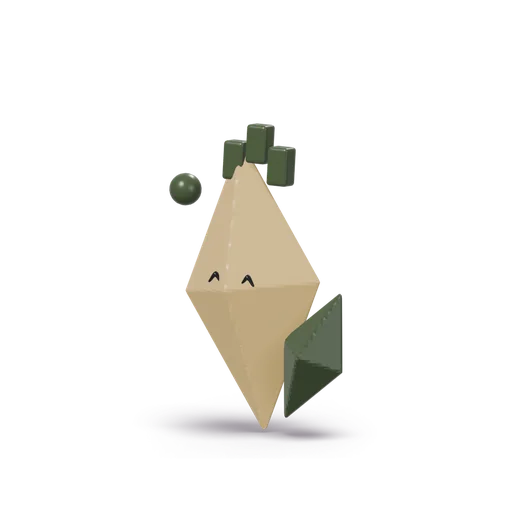
Read profile ↓I’m Fizz. Choose a section to learn about ENTP.
Energy often comes from an audience. People with this preference think by talking, and a sharp listener effectively doubles what they can do with an idea.
Overview +
ENTP is one of 16 MBTI-style personality types: Extraversion, Intuition, Thinking, and Perceiving. People with this preference often think by talking, connect unrelated fields, and would rather explore ten possibilities than lock one early. Debate usually functions as quality control, not as a fight. Routine tends to bore them. Four letters name a pattern of habits, not a talent score. Borderline results can flip when life or work changes. Treat this page as a hypothesis to poke, not as a box that owns you. A good listener often multiplies what they can think. They usually shine at the earliest stage of a problem and stall when the work becomes maintenance.
In your element.
See how these strengths might show up in everyday life.
01 / StrengthIdea volume
+
Where other people produce an option, people with this preference often produce a menu, including paths nobody asked for yet.
Five go-to-market angles on the whiteboard before the first coffee is gone.
02 / StrengthVerbal agility
+
They often explain, persuade, and reframe in real time, sometimes mid-sentence, which makes a stuck room move again.
Renaming the problem in the meeting so the team can actually start.
03 / StrengthCross-domain connections
+
A trick from one field often becomes a way through another. Unrelated notes get collaged into a usable move.
Using a game mechanic to unstick a pricing argument in a product review.
04 / StrengthEase in chaos
+
Ambiguity that freezes other people is often home turf. They can improvise while the brief is still changing under them.
Shipping a rough demo the same week the requirements flip twice.
05 / StrengthCheerful contrarianism
+
They often question a sacred assumption early, which can save a team from expensive groupthink if the room can hear it as help.
Killing a beloved slogan in draft one because the claim cannot be defended.
06 / StrengthEnergizing presence
+
Brainstorms often get better with this preference in the room. Pace, jokes, and extra options can pull a tired group back in.
Turning a flat workshop into a list of testable bets by lunch.
A little room to stretch.
01Launch over landing
+
The gap between projects started and projects landed can grow embarrassing. The interesting part ends, and attention goes hunting.
Cap active work at two. Finishing only trains at the end of a thing.
02Debate fatigue
+
What feels like play can feel like cross-examination to everyone else. People leave the joke and remember the grilling.
Ask whether they want pushback or company before you start testing the claim.
03Detail contempt
+
Invoices, forms, and maintenance sit under attention until they explode. The uninteresting layer is still load-bearing.
Borrow a checklist, a partner, or a deadline for the layer that bores you.
04Overcommitment
+
Saying yes is cheap when a future version of you is supposed to handle the cost. Calendars do not work that way.
Do not accept a third live project until one of the first two has shipped.
05Novelty chasing
+
The next idea is often shinier than the current obligation. Shiny is not the same as better, and the parked work notices.
Park the new idea in writing for two weeks before you let it steal a live project.
06Clever over kind
+
Winning the argument can outrun the relationship. Being right in the room is a poor prize if people stop bringing you the real problem.
If faces have gone tight, drop the bit and ask what would actually help.
Room for someone else.
Playful, stimulating, and rarely boring. People with this preference often flirt through banter, show care through teasing, and treat a partner as a co-conspirator in whatever comes next. They usually need someone who can enjoy mental sparring, or at least is not wounded by it. Two lessons tend to arrive the hard way: some topics are not debates, and consistency is itself a form of romance. Showing up on time, every time, speaks loudly.
Banter that keeps a long relationship from going flat and procedural.
A partner treated as a co-conspirator in the next experiment, not as an audience.
Mental range: new angles, new jokes, and a refusal to let the script freeze.
Honesty in argument, including the habit of switching sides to test a claim.
A sore subject can get picked up as a puzzle instead of a feeling.
Consistency slips: late arrivals, moved plans, a yes that belonged to a future self.
Teasing meant as affection can land as a public score the partner did not want.
Ask "pushback or company?" before you start testing what they just said.
Put one recurring plan on the calendar and keep it, even when a new idea appears.
Hold INFJ and INTJ pairing folklore loosely, because letters do not pick a partner for you.
Same conversation.
Different perspectives.
Choose two types to compare their preferences at work and in relationships.

1 shared preference.
IIntroversionA preference for thinking things through alone and spending time in quieter settings.
EExtraversionA preference for talking things through and spending time with other people.
NIntuitionA preference for patterns, connections and the possibilities behind what you see.
NIntuitionA preference for patterns, connections and the possibilities behind what you see.
TThinkingA preference for weighing logic and consistent principles when making a decision.
FFeelingA preference for weighing personal values and the effect a decision has on people.
JJudgingA preference for making plans, reaching decisions and knowing what comes next.
PPerceivingA preference for keeping options open and adapting as new information comes in.
INTJ and ENFP share intuition and differ on energy, decisions, and structure.
Friendship often works when the ENFP brings people and options and the INTJ brings a private, tested view.
It frays when debate is treated as rejection, or when last-minute plans collide with a closed calendar.
Shared letters do not measure compatibility. These are conversation starters, not predictions about a relationship.
Helping another person grow.
As parents, people with this preference often treat the child as a co-conspirator: jokes, experiments, and a running argument that is meant as respect. They may forget the boring consistency a child uses as safety, or turn a feeling into a debate. Show up on time, and leave some topics off the table.
What you may bring
A house that stays mentally alive, with jokes and experiments in ordinary hours.
Takes the child's argument seriously, including a fair fight over an idea.
Helps a stuck kid generate options instead of handing down a single script.
Where it can get tricky
Bedtime, forms, and the same breakfast can feel like a trap rather than safety.
A child's hurt can get picked apart as a claim instead of sat with.
New ideas steal the hour that was supposed to be the boring, kept promise.
Small things to try
Treat some topics as off-limits for debate unless the child asks for pushback.
Put the recurring care (pickup, bedtime, the weekly thing) on a shared list with a partner.
Showing up on time, every time, is a louder love note than a brilliant new plan.
Look at the setting.
Then the job title.
People with this preference often thrive wherever the problem keeps changing. They usually shine at the earliest stage: naming the opportunity, building a rough first version, selling the vision. Repetitive administration is where the work stalls. The smart move is partnering with people who love operations, then respecting them loudly and often. Product strategy, marketing, litigation, journalism, consulting, and sales engineering are common fits when the brief keeps moving.
Product strategy↗
The brief keeps moving, and someone has to name the next bet before it is obvious.
Marketing and creative direction↗
Reframing in real time, plus a menu of angles a more linear brief would miss.
Litigation↗
Argument as the job, with a case that changes as the other side moves.
Journalism↗
New facts daily, a story that has to be recast, and talk as the working method.
Consulting↗
A fresh problem each engagement, and a recommendation that has to survive a room.
Sales engineering↗
Live problem-solving in front of a customer, with a product that has to be recast on the call.
Roles that are mostly maintenance, invoices, and the same ticket forever.
Places that hear a counter-argument as a loyalty problem instead of a test.
Jobs that reward starting a tenth project more than landing the second.
Your role in the room.
As a colleague, this preference often looks like the person who multiplies options, recasts the brief mid-meeting, and tests a claim by arguing the other side. They wake a flat room up. They also leave half-built threads behind them.
Drops a menu of options on the table before anyone has picked a frame.
Plays the other side of the argument, which can feel like sabotage if you wanted agreement.
Starts a thread that is still open weeks later because a newer idea arrived.
Make your meaning easier to hear.
Energetic, idea-driven, and often playing the other side to see if a claim survives. People with this preference usually enjoy banter and may test an idea by defending a position they do not fully hold.
What helps
Let them talk the idea into shape before you ask for a locked plan.
Mark which part is play and which part is a real decision, out loud.
Give them a parking lot for new ideas so the current thread can finish.
What to avoid
Treating every spar as a personal attack rather than as a test of the claim.
Asking them to repeat last week's script with no new problem to chew.
Leaving the operations layer unnamed, then being surprised when it was never done.
Notice the signal.
Give yourself room.
You might notice
Attention locks onto tiny details they would normally skip, with less of the usual range.
The jokes dry up, and they go quiet about whether they are actually any good.
Work in progress multiplies while nothing lands, then the self-critique gets harsh.
Ways to recover
Cap the live list at two, then finish one ugly end-to-end before opening a third.
Talk to one person who likes you, not to a crowd that wants another performance.
Walk, sleep, then write the competence scare as a test you can actually run.
Growth, without a personality transplant.
More ideas will not fix the stall. Cap the live list, ask before you debate, write the new thought down instead of chasing it, and borrow structure for the boring layer. Finishing is how you respect your own menu.
Cap work in progress
Two live projects, maximum. A third waits in writing until one of the first two has landed.
Cap work in progress
Two live projects, maximum. A third waits in writing until one of the first two has landed.
Ask before you debate
Open with "pushback or company?" and believe the answer, even when the claim looks fun to test.
Park the new idea
Write it down and leave it for two weeks. If it still pulls, it has earned a slot.
Borrow the scaffolding
Use a deadline, a partner, or a checklist for invoices and maintenance. Willpower will not do this job.
Land one ugly finish
Pick the oldest open thread and take it to done, including the boring last mile, before you start another.
Characters you may know.
Fictional people, familiar patterns. These are illustrative matches, not official types.

The Joker
DC Extended Universe

Harley Quinn
DC Extended Universe

Bart Simpson
The Simpsons

Ian Malcolm
Jurassic Park

Saul Goodman
Breaking Bad

Vector
Despicable Me
How these matches were made +
An illustrative match from our fictional-character scores, not an official type. Extraversion maps to E/I, Openness to N/S, Agreeableness to F/T, and Conscientiousness to J/P. Each mapped score must be at least 4 points from the midpoint of 18 on a 0 to 36 scale. Near-midpoint characters are left out.
More about ENTP.
How is ENTP different from ENFP?+
The third letter is the main split. People with ENTP preferences often test ideas through argument and will defend a side they do not fully hold. People with ENFP preferences often filter ideas through personal values and can hear debate as conflict. Both generate options and resist routine. If friendly argument feels like recreation, start here.
Can an ENTP become a different type?+
Not necessarily. The four letters describe current preferences, and preferences drift. Many people mellow with age, and someone who scored narrowly on Perceiving may later test as Judging after years of deadline-driven work. Treat a single result as a hypothesis, and watch the underlying scores more than the badge.
How rare is ENTP?+
Commonly cited estimates land ENTP at roughly 2 to 5 percent of the US population. Precision here would be fake: the numbers vary by sample, country, and instrument, so a loose range is the most anyone can claim in good faith.
Who is an ENTP compatible with?+
Type folklore likes to pair ENTP with INFJ and INTJ, imagining a spark between verbal improvisers and quiet strategists. It makes a story, but evidence for type-based matching is weak. Kindness, reliability, and repair after conflict track satisfaction better than letters. Learning when to stop debating travels farther than a pairing chart.
Is the ENTP type test a clinical instrument?+
No. This typology is a self-reflection framework, not a clinical instrument. TPP's type test runs 72 forced-choice questions, costs nothing, needs no signup, and returns a result instantly. The Big Five assessment on the same site stands on stronger empirical ground if you want continuous traits instead of a four-letter stamp.
Want to find your type? Take the personality type test.
What sounds
like you?
Poke this page. People with ENTP preferences often do their best work when the problem is still moving, the room will argue in good faith, and someone else owns the operations layer. They often stall when every topic becomes a debate, or when a tenth idea is allowed to kill the second. TPP's type test is 72 forced-choice questions, free, instant, no signup. If four letters feel cramped, use the Big Five model instead.
Start personality type test ↗Sources and limitations +
These are MBTI-style editorial descriptions, not the official MBTI assessment or a diagnosis. Preferences do not determine abilities, careers or relationships. The imported profile content is awaiting its final source review.
Myers and Briggs Foundation, Evolving the MBTI Legacy, Jung Briggs Myers lineage ↗
CAPT Estimated Frequencies, ENTP TOTAL 2 to 5 percent (Wayback 2019-03-30) ↗
The Myers-Briggs Company, MBTI Facts and Common Criticisms, Pittenger retest note ↗
Explore continuous traits with the Big Five ↗