FIELD NOTES
The Long Planner
People with INTJ preferences often plan far ahead, trust logic over custom, and work best in quiet.
Read profile ↓I’m Orry. Choose a section to learn about INTJ.
Energy often comes from solitude. People with this preference keep a small, chosen circle, prepare before they speak, and find open-ended socializing costly even when they like the people.
Overview +
INTJ is one of 16 MBTI-style personality types: Introversion, Intuition, Thinking, and Judging. People with this preference often think in long-range plans rather than improvisation, trust logic over convention, and do their best work in quiet autonomy. They often set high standards, question received wisdom, and follow through on ambitious goals with unusual persistence. The four letters describe preferences, not abilities or fate. Scores near the middle of any dichotomy can move between sittings. Use this page as a map of habits to test, not as a verdict.
In your element.
See how these strengths might show up in everyday life.
01 / StrengthLong-range strategy
+
People with this preference often think in years, not weeks, and can hold a complex plan steady while revising its details.
A three-year product bet kept intact while weekly tactics change.
02 / StrengthIndependence
+
They often need neither supervision nor applause to keep working, and they will start a hard problem without a crowd.
Owning a difficult analysis end to end without a status meeting.
03 / StrengthIntellectual honesty
+
When the evidence changes, the conclusion often changes, even when that stings a plan they already liked.
Killing a favorite design after a failed prototype, without drama.
04 / StrengthFollow-through
+
Ideas often get executed, not only admired. Persistence after the interesting part is over is a common pattern.
Shipping the last unglamorous integration after the architecture is done.
05 / StrengthCalm under pressure
+
Crises tend to sharpen focus rather than scatter it. People with this preference often get more precise when the room panics.
Writing the recovery sequence while others debate whose fault it was.
06 / StrengthOriginal insight
+
Because they question defaults, they often see structural problems, and structural fixes, that other people walk past.
Noticing the incentive that makes a process fail, then redesigning it.
A little room to stretch.
01Feelings treated as noise
+
Emotional information is still information. People with this preference can ignore it until it becomes a crisis.
Ask whether the other person wants help or company before fixing.
02Private certainty
+
A plan refined alone for months may carry flaws that a five-minute conversation would have caught.
Show the half-built strategy to one trusted critic early.
03Impatience with slower thinkers
+
The sigh is audible, and people remember it. Speed of speech is not the same as quality of thought.
Count questions in the next meeting and wait through the pause.
04Perfection as delay
+
Polishing the strategy can quietly become a way to avoid testing it against reality.
Ship a smaller version on a named date and learn from contact.
05Living in the future
+
Constant planning can crowd out present enjoyment and the people offering it.
Leave one unplanned block on the calendar each week on purpose.
06Undervaluing the room
+
Consensus-building can look like waste until a plan dies for lack of allies.
Name who must live with the decision and invite their dissent.
Room for someone else.
Reserved at first, then often deeply loyal. People with this preference tend to show care through usefulness: solving the problem, remembering the preference, building the shared future. They usually want a partner who says what they mean, respects alone time, and does not need constant reassurance. The classic friction is treating a bad day as a ticket to fix rather than a feeling to sit with.
Steady loyalty once trust is earned, without much performance.
A shared future talked about in concrete plans, not only in mood.
Honesty that skips flattery, which some partners find restful.
Practical help that shows up as repaired problems and kept promises.
A partner’s feelings can be treated as a defect in the plan.
Alone time can be taken as withdrawal rather than recovery.
Appreciation may stay internal, so the other person never hears it.
Ask “help or company?” before offering a fix.
Say one specific appreciation out loud, on purpose, each day.
Treat type lore about ENFP or ENTP matches as folklore, not evidence.
Same conversation.
Different perspectives.
Choose two types to compare their preferences at work and in relationships.

1 shared preference.

IIntroversionA preference for thinking things through alone and spending time in quieter settings.
EExtraversionA preference for talking things through and spending time with other people.
NIntuitionA preference for patterns, connections and the possibilities behind what you see.
NIntuitionA preference for patterns, connections and the possibilities behind what you see.
TThinkingA preference for weighing logic and consistent principles when making a decision.
FFeelingA preference for weighing personal values and the effect a decision has on people.
JJudgingA preference for making plans, reaching decisions and knowing what comes next.
PPerceivingA preference for keeping options open and adapting as new information comes in.
INTJ and ENFP share intuition and differ on energy, decisions, and structure.
Friendship often works when the ENFP brings people and options and the INTJ brings a private, tested view.
It frays when debate is treated as rejection, or when last-minute plans collide with a closed calendar.
Shared letters do not measure compatibility. These are conversation starters, not predictions about a relationship.
Helping another person grow.
As parents, people with this preference often treat childhood as a long project: competence, honesty, and a future the child can steer. They usually explain the why behind a rule. They may underplay warmth, skip the silly bit, or turn a child’s feeling into a lesson before the child is ready. The growth move is sitting with the feeling first, then the plan.
What you may bring
Clear standards, explained, so the child knows what is expected.
Patience with hard skills and long practice, not only with talent.
Respect for the child’s mind, including disagreement done in good faith.
Where it can get tricky
A child’s messy emotion can look like a problem to debug.
Play without a purpose can feel like wasted time.
High standards meant as love can land as a grade.
Small things to try
Name the feeling before you name the next step.
Schedule unstructured play as if it were a meeting you will not move.
Praise effort and kindness out loud, not only results.
Look at the setting.
Then the job title.
People with this preference often thrive where strategy, depth, and autonomy meet. They usually do well as the person trusted to own a hard problem end to end. They wilt under micromanagement, performative meetings, and roles that reward visibility over substance. The best-fit roles share one feature: results are measured by the quality of the thinking, not the volume of the talking.
Software architecture↗
Systems that must stay coherent while details keep changing.
Scientific research↗
Long questions, independent method, and evidence that can kill a theory.
Data science↗
Pattern first, then a model other people can run.
Law and analysis↗
Arguments that have to survive scrutiny, not just sound confident.
Investment analysis↗
A thesis held across time, revised when the facts move.
Product or policy strategy↗
A multi-year bet with owners, constraints, and a clear no.
Roles with responsibility but no authority to change the system.
Cultures that treat disagreement as disloyalty.
Work that is mostly status theater and calendar residue.
Your role in the room.
As a colleague, this preference often looks like a person who arrives prepared, cuts to the structure of the problem, and would rather be useful than liked in the meeting.
Sends a written view before the discussion so the room can react.
Flags a flaw early, which can feel cold even when it saves time.
Protects focus time and may seem unavailable for hallway chat.
Make your meaning easier to hear.
Direct, concise, and aimed at substance. People with this preference often want a structured argument and become impatient with repetition or small talk.
What helps
Lead with the point, then the evidence, then the ask.
Give reading time before a live debate on a hard call.
Mark what is decided versus what is still a hypothesis.
What to avoid
Long warm-ups that hide the request until the last minute.
Repeating the same claim without new evidence.
Taking a critique of the idea as a critique of the person.
Notice the signal.
Give yourself room.
You might notice
The plan becomes rigid, and other people’s competence is scored in public.
Withdrawal into over-analysis, with fewer check-ins than usual.
Uncharacteristic snap judgments about people who were previously trusted.
Ways to recover
A block of uninterrupted quiet, then one trusted critic, not a crowd.
Sleep, movement, and a smaller next action instead of a bigger model.
Write the fear as a testable claim, then look for disconfirming facts.
Growth, without a personality transplant.
Growth for this preference is rarely more analysis. It is earlier contact with other minds, spoken appreciation, and leaving room for unplanned data. The aim is a better model, not a softer personality.
Test plans early
Share the half-built strategy with one critic before it hardens into certainty.
Test plans early
Share the half-built strategy with one critic before it hardens into certainty.
Say the appreciation
The people around you cannot hear internal approval. Use one specific sentence.
Schedule slack
Leave deliberate room for the unplanned. That is where new data comes from.
Name the feeling
Once a day, notice and label your own emotional state. It improves the model.
Ask more than you assert
In the next three meetings, count questions versus statements, then notice what surfaces.
Characters you may know.
Fictional people, familiar patterns. These are illustrative matches, not official types.

Batman
DC Extended Universe

Walter White
Breaking Bad
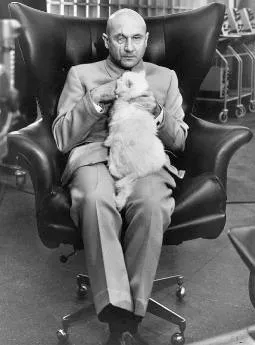
Ernst Stavro Blofeld
James Bond

Severus Snape
Harry Potter

Arya Stark
Game of Thrones

Gru
Despicable Me
How these matches were made +
An illustrative match from our fictional-character scores, not an official type. Extraversion maps to E/I, Openness to N/S, Agreeableness to F/T, and Conscientiousness to J/P. Each mapped score must be at least 4 points from the midpoint of 18 on a 0 to 36 scale. Near-midpoint characters are left out.
More about INTJ.
How is INTJ different from INTP?+
The last letter is the main split. INTJ preferences often want closure: form a plan and run it. INTP preferences often want accuracy: keep testing. Both are introverted and analytical, which is why they get confused. If deadlines restore you more than open questions do, start here.
Can an INTJ become a different type?+
A type code is a snapshot of current preferences, not a fixed label. Scores near the middle of any dichotomy can flip between sittings, and people often behave differently as they age or change environments. Retesting after a major life change is normal.
How rare is INTJ?+
Commonly cited estimates place INTJ at roughly 2 to 4 percent of the general population, and several samples describe it as rarer among women. Treat the figures loosely: they come from different instruments and convenience samples, so nobody can honestly give a precise number.
Who is an INTJ compatible with?+
Community lore often pairs INTJ with ENFP and ENTP. Treat that as folklore. Research has not shown that type pairings predict relationship success. Shared values, repair after conflict, and mutual respect matter more than letters. Any pairing can work when both people flex.
Does TPP treat this as a clinical result?+
No. MBTI-style typology here is a self-reflection framework, not a clinical instrument. TPP also offers the Big Five model, which has stronger empirical support, plus a free 72-question type test with instant results and no signup.
Want to find your type? Take the personality type test.
What sounds
like you?
If this page felt like a useful map, treat it as a hypothesis and test it. People with INTJ preferences often do their best work when they can think in private, argue from evidence, and run a long plan. They often stall when they skip other people’s data, including feelings. The free type test is 72 forced-choice questions. The Big Five is the stronger research model if a four-letter box feels too tight.
Start personality type test ↗Sources and limitations +
These are MBTI-style editorial descriptions, not the official MBTI assessment or a diagnosis. Preferences do not determine abilities, careers or relationships. The imported profile content is awaiting its final source review.
Myers and Briggs Foundation, Our Legacy ↗
Myers and Briggs Foundation, Three Unique Instruments ↗
CAPT Estimated Frequencies (Wayback, 2019-03-30) ↗
MBTIonline, least common type (2017-08-07) ↗
Boyle (1995) Bond ePublications record ↗
Explore continuous traits with the Big Five ↗